After Helping 3 Elders Learn Tech, This Method Finally Made It Click
Have you ever tried teaching an older family member to use a smartphone—only to see their eyes glaze over in frustration? I’ve been there, more than once. It wasn’t until I stopped focusing on the tech itself and started paying attention to how they learn that things changed. What if the real breakthrough isn’t a fancier device, but a smarter, kinder way to teach? This is the simple, human-centered method that finally worked. After helping my mom, my aunt, and my neighbor—three amazing women in their 60s and 70s—gain real confidence with technology, I realized something powerful: it’s not about how smart the phone is. It’s about how we show up when we teach. And when we get that right, the results can be life-changing.
The Moment I Realized Tech Wasn’t the Problem
I remember sitting at my mom’s kitchen table last winter, trying to help her join a video call with my niece. She held her phone like it might bite her. Her hands trembled slightly as she tapped the screen, missing the button again and again. 'I’m just too old for this,' she sighed, setting the phone down. 'Everyone else figures it out so fast. Why can’t I?' That moment hit me hard. It wasn’t the first time I’d seen her give up. I’d walked her through the steps a dozen times—download the app, tap here, allow permissions, press the green button. But every time, it slipped away. And each failure made her feel a little smaller, a little more left behind.
It wasn’t until later, when I watched her calmly fold laundry—remembering every step of a decades-old family recipe, or recalling names and birthdays for all her grandchildren—that I realized the problem wasn’t her memory or intelligence. The problem was how I was teaching. I had been treating the phone like a machine to be operated, not a bridge to be crossed. I was focused on the 'how' without ever explaining the 'why.' And worse, I was rushing. What felt like a simple five-minute task to me was, for her, a high-pressure performance with invisible rules and no room for mistakes.
That’s when it clicked: the real barrier wasn’t the technology. It was the emotional weight behind it. Fear of breaking something. Shame for not understanding. The quiet worry that if they can’t keep up, they’ll lose touch—not just with apps, but with people they love. Once I saw that, everything changed. I stopped trying to 'fix' her tech skills and started building her confidence. And that shift made all the difference.
Why Traditional Tutorials Fail Our Elders
We’ve all seen them—the fast-talking YouTube videos, the printed step-by-step guides with tiny screenshots, the well-meaning but overwhelming tech support calls. They follow the same pattern: 'Open the app. Tap Settings. Scroll down. Select Account. Enter your password.' It’s logical, efficient, and completely out of step with how many older adults learn best. The truth is, most tech tutorials are built for a younger brain—one that’s used to rapid information processing, multitasking, and learning through trial and error. But as we age, our brains don’t slow down in a bad way. They change. And those changes matter when it comes to learning something new.
For one, older adults often benefit from slower pacing and more repetition. A single demonstration isn’t enough. They need to see it, do it, and do it again. They also process information more deeply when it’s meaningful—when they understand why it matters. Telling someone to 'enable notifications' means nothing unless you explain, 'This way, you’ll hear a chime when your grandson sends a photo.' Without that context, it’s just another confusing step in an endless list.
And then there’s the fear factor. Many elders are afraid of making a mistake—of accidentally deleting something important, or worse, causing a problem that no one can fix. I’ve seen my aunt hover over the delete button for a full minute, whispering, 'What if I mess it up?' That kind of anxiety shuts down learning. It doesn’t help to say, 'It’s okay, just try!' What helps is creating a safe space where mistakes aren’t just allowed—they’re expected, and even celebrated as part of the process.
Most tutorials skip this emotional layer entirely. They assume the user is neutral, curious, ready to learn. But real learning—especially later in life—happens in the heart first, then the mind. When we ignore that, we set people up to fail before they even begin.
The 3-Step Learning Loop That Actually Works
After a lot of trial and error—and more than a few awkward silences—I developed a simple method that finally helped my family members not just understand technology, but truly own it. I call it the Connect – Practice – Anchor loop. It’s not flashy, and it won’t win any tech awards. But it works because it respects how people actually learn, especially when they’re older and more cautious.
The first step is Connect. Before we touch the device, I help them link the new skill to something familiar. For my mom, I said, 'Think of a video call like a window. Instead of walking to the front porch to see someone, you’re opening a magic window on your phone.' For my neighbor, who loves sending printed photos to her grandkids, I said, 'This app is like a digital mailbox. You drop a photo in, and it shows up on their phone instantly.' By grounding the tech in a real-life image they already understand, the abstract becomes concrete.
The second step is Practice—but not in the way most people think. Instead of walking through the whole process at once, we break it into tiny, manageable pieces. One session, we just practice unlocking the phone and finding the app. The next time, we open the app and press the video call button—no call made, just getting used to the motion. I stay quiet, let them try, and only step in if they’re truly stuck. And when they succeed? I celebrate. Even if it’s small. 'You found the button all by yourself—that’s huge!' That kind of encouragement builds confidence faster than any tutorial ever could.
The final step is Anchor. This is where the skill becomes part of their life. We tie it to a routine or an emotional reward. For my aunt, we linked video calls to Sunday afternoons—right after her tea. 'Now you can see your grandkids’ faces while you drink your cup,' I said. That connection made it stick. She didn’t just learn how to do it. She wanted to do it. And that desire is what turns a one-time task into a lasting habit.
Designing a Senior-Friendly Learning Environment
Where and how you teach matters just as much as what you teach. I learned this the hard way when I tried to help my mom in her dimly lit living room, with the TV on and her reading glasses halfway down her nose. She couldn’t see the screen, and I was talking over the noise of the evening news. No wonder she was frustrated. Once I moved us to the kitchen table, turned off the TV, opened the blinds for natural light, and made sure her glasses were on straight, everything improved.
Physical comfort plays a big role in learning. Make sure the screen is clean and glare-free. Increase the text size so it’s easy to read. Use a phone stand or prop the device at a comfortable angle—no one wants to hold a phone steady for ten minutes while learning. And consider the chair. If they’re uncomfortable, their focus will drift.
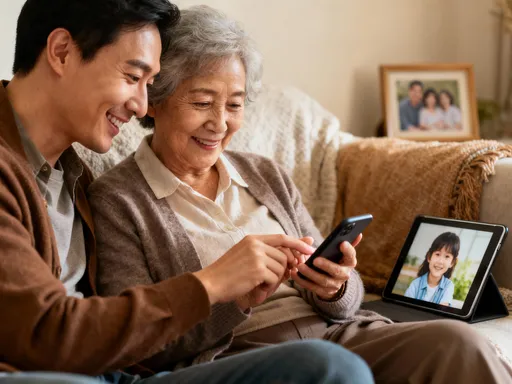
But the emotional environment is even more important. I used to sit across the table from my mom, like a teacher at a desk. It felt formal, even a little confrontational. Now, I sit beside her. We share the same view of the screen. I point with my finger instead of taking the phone. This small change made a big difference—it turned instruction into collaboration. She didn’t feel like she was being tested. She felt like we were figuring it out together.
Your tone of voice matters too. I’ve caught myself saying, 'No, not like that—like this,' and immediately seen her shoulders slump. Now, I use phrases like, 'Let’s try it together,' or 'That was close! Want to give it one more try?' I’ve learned to pause, breathe, and wait—sometimes for a full minute—while she processes. And I always, always celebrate the small wins. 'You remembered the home button!' 'You tapped the right icon!' These moments build momentum. They remind her that she’s capable, even when it feels hard.
Tools That Support, Not Overwhelm
Not all tech is created equal—especially when it comes to older users. The goal isn’t to give them the most powerful phone or the app with the most features. It’s to find tools that are simple, reliable, and emotionally rewarding. Over time, I’ve introduced a few that have made a real difference in my family’s lives.
One of the best investments was a simplified smartphone for my neighbor. It’s not a toy—it’s a real Android phone, but with a custom interface that shows only the apps she uses: phone, messages, camera, and video calls. The icons are large, the text is clear, and there are no confusing menus. She doesn’t feel lost because she only sees what matters to her. And when she receives a photo from her granddaughter, it pops up full-screen with a gentle chime. That moment of joy? That’s what keeps her coming back.
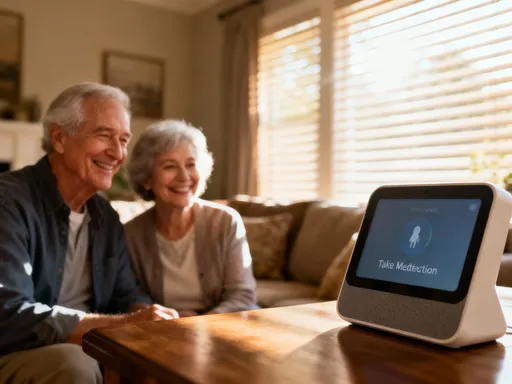
Another game-changer was a voice-activated assistant. I set up a small smart speaker in my mom’s kitchen. Now, instead of fumbling with her phone, she can say, 'Call my daughter,' or 'Show me photos from last week.' It’s not magic, but it feels like it. She especially loves asking for recipes or weather updates—simple things that make her day easier. The best part? She doesn’t have to touch anything. Just speak, and the device responds. It’s independence, one voice command at a time.
And then there’s photo sharing. I introduced my aunt to a popular family-sharing app—one with large buttons and automatic album creation. Now, instead of waiting weeks for printed photos, she sees new pictures the moment they’re taken. She’ll say, 'Oh, there’s baby Emma in her little red hat!' with pure delight. That immediate connection—seeing life as it happens—has brought her so much joy. These tools aren’t about features. They’re about feelings. They’re about love, memory, and belonging. And when tech serves those things, it becomes not just useful, but meaningful.
Turning Skills Into Daily Habits
Learning something once is one thing. Doing it regularly is another. I’ve seen my mom master a video call in a single session—only to freeze up the next week when she tried alone. The gap between 'I can do it' and 'I do it' is where many people get stuck. That’s why habit formation is so important.
I use a simple trick called habit stacking—pairing the new tech behavior with an existing routine. For my mom, video calls happen right after her morning tea. For my aunt, checking photos is part of her evening wind-down, after dinner and before the news. These anchors make the behavior automatic over time. It’s not about willpower. It’s about design. When the new habit fits naturally into the rhythm of the day, it stops feeling like a chore.
Consistency builds confidence. The more my mom makes successful calls, the more she believes she can do it. And that confidence spills over. Now, she’ll try other things—sending a voice message, opening a text, even taking a selfie. Each small success fuels the next. I’ve also encouraged her to keep a simple log—just a checkmark on the calendar for each call made. Seeing those marks grow creates a sense of progress. It’s visual proof that she’s learning, even on days when it doesn’t feel like it.
The real reward isn’t just tech fluency. It’s the moments it unlocks. My mom no longer misses her grandson’s first steps because no one thought to record them. She sees them in real time. She laughs at silly faces. She feels present. That’s the true measure of success—not how many apps she can use, but how much more connected she feels.
The Ripple Effect: When One Skill Opens a World
What’s amazed me most isn’t just that my family members learned to use technology. It’s how one small skill sparked a wave of curiosity and confidence. My aunt, who once refused to touch a tablet, now asks, 'Can I learn how to send a message?' My mom, who dreaded video calls, now suggests them. 'Let’s have a little chat this afternoon,' she’ll say. That shift—from avoidance to initiative—is everything.
But the impact goes beyond the individual. When elders feel included in the digital world, the whole family changes. Grandkids wave at the screen with genuine excitement. Parents breathe easier, knowing their mom isn’t isolated. And those spontaneous moments—seeing a new haircut, hearing a child’s laugh, sharing a birthday wish—add up to a richer, more connected family life.
I used to think workflow optimization was just for offices and startups. Now I know it’s for homes too. It’s about designing simple, repeatable systems that reduce stress and increase joy. It’s about using technology not to impress, but to include. To love. To stay close, even when life pulls people apart.
So if you’ve ever felt frustrated trying to teach an older loved one, I get it. But what if the answer isn’t more patience, or a better device, or a faster tutorial? What if it’s simply this: meet them where they are. Connect the tech to what they care about. Let them practice at their own pace. Anchor it in their daily life. And then, step back and watch what happens.
Because when we stop teaching technology and start teaching confidence, something beautiful unfolds. They don’t just learn how to use a phone. They remember how capable they are. And that? That’s the real upgrade.